

Diet Plans for Thyroid & PCOS: Managing Weight With Health Conditions
Do you ever feel like your body is working against you? Like no matter what you do, the scale won’t budge, and your energy is constantly drained? If you’re navigating life with both PCOS and a thyroid condition like hypothyroidism, you’re not alone in that struggle.
Research shows a significant link between these two hormonal conditions. In fact, a substantial number of women with PCOS also face thyroid challenges. It’s a double whammy that can make managing your weight and overall health feel incredibly difficult.
But here’s the empowering truth: you can turn things around. The right nutritional approach can be a powerful ally. This guide is designed to show you how a strategic diet can help bring your body back into harmony.
You’ll discover that you don’t need two separate, complicated plans. The same core principles can support your body in managing both conditions effectively. Get ready to feel more in control and energized.
Key Takeaways
- A significant number of individuals with PCOS also experience thyroid issues, making you part of a common experience.
- Both PCOS and hypothyroidism are rooted in hormonal imbalances that impact metabolism and weight.
- Strategic meal planning can simultaneously address the symptoms of both health challenges.
- You can simplify your life by using one cohesive nutritional strategy instead of juggling multiple plans.
- Understanding which foods to embrace and which to avoid is the first step toward taking control of your well-being.
- Making informed food choices can lead to noticeable improvements in energy, mood, and weight management.
Understanding Thyroid and PCOS: Symptoms and Challenges
Understanding the signals your body sends is the first step toward reclaiming control over your well-being. When you’re dealing with hormonal disorders, recognizing patterns helps you address the root causes rather than just treating individual symptoms.
Recognizing Hormonal Imbalances
Polycystic ovary syndrome develops when your reproductive hormones fall out of balance. Your body may produce excess androgens, leading to multiple cysts on your ovaries.
This ovary syndrome creates a cascade of effects throughout your system. The hormone imbalance affects everything from your menstrual cycle to your metabolism.
Thyroid disorders work differently but create similar challenges. When your thyroid gland underperforms, it fails to produce enough crucial hormones.
These hormones regulate your energy, mood, and metabolic rate. Without proper levels, your entire system slows down.
Common Symptoms and Health Risks
Women with polycystic ovary syndrome often experience irregular periods and unwanted hair growth. Acne and hair thinning are also common signs of this syndrome.
Thyroid conditions manifest through fatigue, weight gain, and feeling constantly cold. Your metabolism may feel like it’s working against you.
| Symptom Category | PCOS Indicators | Thyroid Disorder Signs | Overlapping Issues |
|---|---|---|---|
| Reproductive Health | Irregular periods, ovarian cysts | Menstrual changes | Fertility challenges |
| Physical Changes | Excess hair growth, acne | Weight gain, dry skin | Hair thinning |
| Metabolic Symptoms | Insulin resistance | Slowed metabolism | Weight management difficulties |
| Overall Well-being | Pelvic pain, mood swings | Fatigue, depression | Low energy levels |
Left unaddressed, these conditions increase risks for serious health complications. Diabetes and heart disease become more likely when symptoms persist without intervention.
Over 50% of women with pcos face weight challenges. This statistic highlights why understanding these disorders is so important for your health journey.
Key Principles for a Healthy Lifestyle with Thyroid and PCOS
When hormones fall out of sync, they can create a cascade of effects throughout your entire system. Understanding these connections helps you make choices that support your overall well-being.
The Role of Hormones in Your Health
Your hormones act as chemical messengers controlling everything from metabolism to mood. With PCOS, insulin resistance often develops when cells stop responding properly.
This forces your body to produce excess insulin just to maintain blood sugar levels. The extra insulin triggers ovaries to produce more testosterone, worsening symptoms.
If you have hypothyroidism, your underactive thyroid slows metabolism. This makes burning calories less efficient and increases fat storage.
Why Diet and Lifestyle Matter
There’s no cure for either condition, but consistent choices make a real difference. The right approach can stabilize insulin levels and support thyroid function.
Focusing on foods that work with your body reduces inflammation. This leads to better energy, mental clarity, and symptom management.
| Hormone Function | PCOS Impact | Thyroid Impact | Lifestyle Support |
|---|---|---|---|
| Metabolism Regulation | Insulin resistance slows processing | Slowed metabolic rate | Balanced nutrition |
| Energy Production | Blood sugar fluctuations | Chronic fatigue | Regular activity |
| Reproductive Health | Ovulation disruption | Menstrual changes | Stress management |
| Weight Management | Difficulty losing weight | Increased fat storage | Consistent routine |
Diet for thyroid and PCOS management: Essential Meal Planning Tips
The right food choices can become your most powerful tool for hormonal harmony. Strategic eating patterns help your body work with you instead of against you.
Balancing Blood Sugar and Insulin Levels
Stable blood sugar is crucial when dealing with pcos hypothyroidism. Dramatic spikes and crashes in glucose can worsen symptoms.
Focus on foods that release energy slowly. High-fiber options help your body process sugar gradually. This supports better insulin function throughout the day.
Incorporating Lean Proteins and Healthy Fats
Protein should be your meal’s foundation. Starting with 30 grams at breakfast helps maintain muscle mass. It also keeps you satisfied longer.
Healthy unsaturated fats reduce inflammation. They support hormone balance without causing weight gain. Include these in every meal for optimal results.
| Meal Component | Blood Sugar Benefits | Hormonal Support | Examples |
|---|---|---|---|
| High-Fiber Carbs | Slow glucose release | Reduces insulin spikes | Oats, legumes, vegetables |
| Lean Protein | Stabilizes energy | Supports muscle maintenance | Chicken, fish, tofu, eggs |
| Healthy Fats | Slows digestion | Reduces inflammation | Avocado, nuts, olive oil |
Meal Planning and Delicious Recipe Ideas
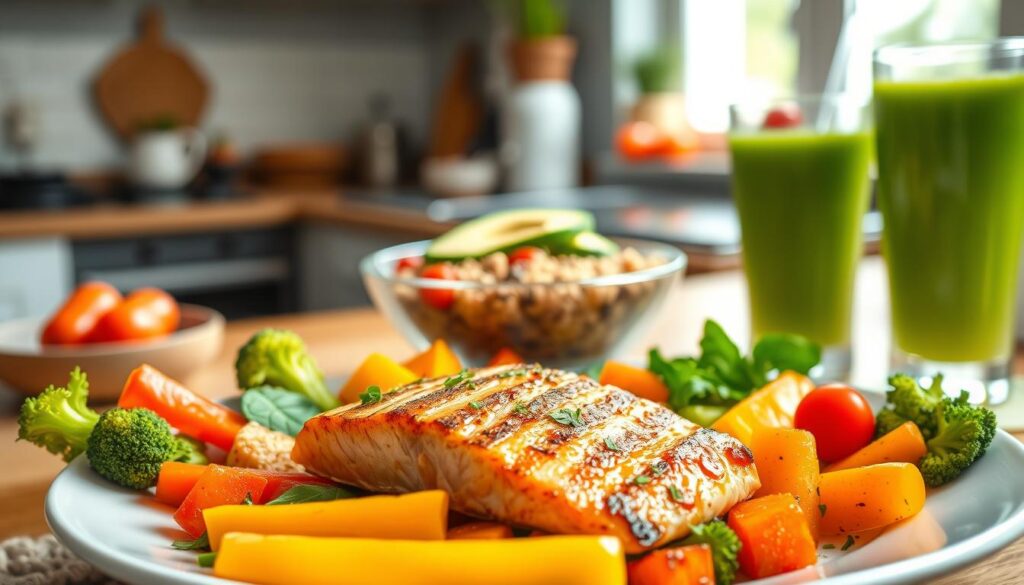
Putting together meals that work for both your hormonal needs can feel like solving a puzzle. The good news is that many delicious foods naturally support both pcos and hypothyroidism. You can create satisfying plates that help with weight loss and overall well-being.
Nutritious Breakfast Options
Kickstart your morning with a Fiesta Egg Omelet. It packs protein from eggs and powerful nutrients from vegetables like spinach and peppers.
For a quick option, a Berry and Nut Parfait is perfect. Low-fat Greek yogurt, fresh berries, and nuts provide a balance that stabilizes your energy.
If you prefer a hearty meal, try a Sweet Potato Breakfast Hash. It combines lean turkey sausage, fiber-rich sweet potatoes, and kale to keep you full and focused.
Wholesome Lunch and Dinner Recipes
Lunch and dinner are chances to get creative. A spinach salad with roasted salmon offers lean protein and anti-inflammatory fats.
Quinoa or brown rice bowls are fantastic bases. Top them with grilled chicken, ground turkey, and a rainbow of roasted vegetables.
Hearty soups, like chicken and kale with wild rice, are comforting and supportive. These foods combat insulin resistance, a key concern with pcos hypothyroidism.
The goal is to focus on whole foods. This approach nourishes your body and helps manage the symptoms of hypothyroidism.
Foods to Embrace and Foods to Avoid
Your grocery cart holds the key to managing symptoms and improving your daily energy levels. Choosing the right foods can significantly impact both your pcos and hypothyroidism symptoms.
Anti-Inflammatory and High-Fiber Choices
Focus on anti-inflammatory powerhouses like berries, fatty fish, and leafy greens. These foods help reduce inflammation that worsens both conditions.
High-fiber vegetables and legumes combat insulin resistance by slowing digestion. This stabilization supports better blood sugar control throughout your day.
Identifying Processed Foods and Sugary Snacks
Limit refined carbohydrates like white bread and sugary cereals. These products spike your insulin levels and increase resistance.
Avoid deep-fried items and processed meats that trigger inflammation. Even some dairy products can affect blood sugar when consumed excessively.
| Food Category | Benefits for PCOS Hypothyroidism | Examples to Embrace | Examples to Avoid |
|---|---|---|---|
| Anti-Inflammatory | Reduces chronic inflammation | Berries, salmon, spinach | Fried foods, processed meats |
| High-Fiber | Combats insulin resistance | Sweet potatoes, lentils, beans | White bread, sugary snacks |
| Lean Proteins | Stabilizes energy levels | Chicken, tofu, fish | Red meat, processed deli meats |
| Healthy Fats | Supports hormone function | Nuts, olive oil, avocado | Trans fats, hydrogenated oils |
Lifestyle and Exercise Tips for Hormonal Balance
Movement can be your secret weapon for balancing hormones and boosting energy. The right combination of activity and rest creates a foundation for lasting well-being.
Effective Workouts to Boost Metabolism
Aim for 150 minutes of moderate cardio each week. Brisk walking, swimming, or cycling improve insulin sensitivity. This helps your body process sugar more efficiently.
Strength training twice weekly preserves muscle mass. Muscle tissue burns more calories at rest, countering weight gain. Even short “exercise snacks” throughout your day add up.
Ten-minute walks after meals or quick bodyweight exercises make a difference. These small changes fit into busy schedules while delivering real benefits.
Stress Management and Restorative Sleep
High stress worsens insulin resistance and weight challenges. Practices like meditation and yoga lower cortisol levels. They create space for hormonal harmony.
Prioritize seven to nine hours of quality sleep nightly. Poor rest undermines your efforts to lose weight. Combine these lifestyle approaches with your medications for best results.
Every woman’s journey is unique. What works for others might need adjustment for you. Celebrate small victories like improved energy or better sleep.
Conclusion
Your journey toward hormonal balance is a powerful act of self-care that brings daily rewards. Research confirms many women with pcos also experience hypothyroidism, making your nutritional approach doubly important.
While medications help control high levels of problematic hormones, your daily food choices give you personal control. A thoughtful diet supports your body rather than working against its natural rhythms.
Work with your doctor to create a plan that fits your unique needs. What helps one person with these disorders might need adjustment for another.
Every positive choice you make builds toward better health. Be proud of the steps you’re taking—they truly matter for your well-being.